
But that doesn’t mean that the Irish national dress and kilt don’t have a history. Like the history of Scottish tartans and the kilt, it’s a fascinating story. So let’s start first with the kilt, before moving on to today’s Irish tartans.
The Origins of the Irish Kilt
Some 20 years before Ireland restored her independence from the UK in 1922, many Irishmen started to wear the kilt as a symbol of national dress.
Ireland, like Scotland, is a Celtic nation and is was thought appropriate by the people behind the independence movement that, at the start of the twentieth century, the kilt should be adopted as the country’s national dress.
The Gaelic League
At the end of the 19th century, the Irish Gaelic League (and before that, the Gaelic Athletic Association) sought to adopt a ‘traditional’ Irish dress, alongside the revival of the Irish language (Gaelic). Irish sentiments against the Union with the UK at the time were running strong and Irish nationalists wanted to promote Irish culture, language and dress.
Irish nationalists from the Gaelic League, such as Shane Leslie, William Gibson and Eamon Ceannt, took their cue for a highland-type dress from publications such as Eugene O’Curry’s 1860 Manners and Customs of the Ancient Irish, which proposed an Irish kilt. The Gaelic League’s aim was to preserve Irish (Gaelic) as the national language, and to study Gaelic literature, both ancient and modern.
The Influence of Patrick Pearse
It was Gaelic League member and nationalist, Patrick Pearse who is most closely associated with the adoption of the kilt in Ireland. Pearse was one of the great figures of the 1916 Easter Rising. Sworn into the Irish Republican Brotherhood three years earlier, it was Pearce that read the Proclamation of the Irish Republic outside the Dublin General Post Office in 1916. He was arrested by the British and executed the following month.
Sixteen years before the rising, in 1900, Pearse had responded to a question put to him about what should be the appropriate national costume for a /Feis/ (a cultural festival) that was being organised by the League. Pearse was well aware of the wearing of trews (high-waisted trousers) as old Irish dress and he responded by saying that ‘he could not imagine an Irish gentleman of three or four centuries ago wearing so clumsy an article or dress. Frankly, I should much prefer to see you arrayed in a kilt, although it may be less authentic, than in a pair of these trews’.
And with these words, the great Patrick Pearse, teacher, barrister, poet, writer, nationalist, republican activist and one of leaders of the Easter Rising, suggested that they adopt the national dress of another country (Scotland) because of the possible perception of trews as ‘clumsy’ or ‘undignified’.
In 1908, Pearse founded St. Enda’s School for Boys to instil or restore “Irishness” into the Irish educational system. As part of this, Pearse, wanting to adopt “traditional Irish dress”, chose the the kilt as a uniform for the boys of St. Enda’s. His introduction of the kilt to the boys of St Enda’s did not meet with universal approval, however. Several complained about them – in the words of one boy, kilts should be worn/only by Scots Highlanders/.
The Irish Pipe Bands
Eamonn Ceannt of the Gaelic League wore a kilt when playing the /uileann/ pipes (Irish bagpipes) when playing before the Pope in 1908. And from then, kilts started to be adopted by Irish pipe bands, some of which survive today, such as the Black Raven Pipe Band, the St. Laurence O’Toole Pipe Band and the Youghal Pipe Band.
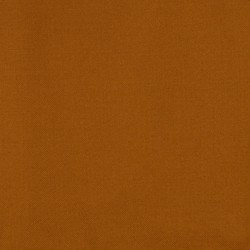
In 1910, Thomas Ashe designed two new uniforms for the Black Raven Pipe band. One included a green kilt, the second included the now familiar burnt-orange coloured saffron kilt. The band competed until 1916, when several of the members joined the Easter Rebellion. Ashe was arrested by the British and began a hunger strike in prison, from which he died in 1917.
Several members of the Youghal pipe band were members of the Irish Volunteers, a nationalist paramilitary force which later became the Irish Republican Army (IRA) during the Anglo-Irish War of 1919-1922. William Royce suggested that the Volunteers adopt the kilt in their uniform.
The Kilt in the Army
The wearing of the saffron kilt and its wider adoption rose during the first world war. Irish regimental pipers began to wear it before the official authorisation of pipers for these regiments.
The Irish Guards received their pipers in 1916, and a photo from that year shows Irish pipers wearing the saffron kilt. And by the end of the war the regulations for pipers specifically stated: “The saffron kilt, pleated all around.”
By the Second World War, the Irish piper’s costume had become standardised: saffron kilt, green /caubeen/ (beret) and the /brat/, or cloak. Besides the Royal Irish Regiment of the British Army, the South African Irish Regiment and the Irish Regiment of Canada still maintain pipers and the now traditional Irish uniform.
Today, the Irish Army and Air Corps maintain pipers in a similar vein to the pipers of the Scottish Regiments of the British Commonwealth. Irish pipers continue to accompany Irish soldiers on United Nations Peacekeeping missions, and their pipes have been heard in such locations as the Congo, Cyprus and Lebanon.
What is the difference between an Irish Kilt and a Scottish Kilt?
Today’s Irish kilts and today’s Scottish kilts are made the same way. A skilled kilt maker will take 8 yards (7.4m) of tartan cloth and turn it into a kilt. The only difference today between Irish and Scottish kilts is the tartan.
The Origins of Irish Tartans
Unlike Scottish tartans, we need only to go back a few years, to the 1990s , to find these.
In the last quarter of the twentieth century, some Irish mills started to redesign traditional Scottish tartans into new designs for Irish names. And, in 1996, following increasing requests from the Irish diaspora for Irish tartans, a Scottish mill, the House of Edgar, designed a range of tartans for the old 32 Irish counties, plus an Irish national tartan to meet this demand.
That’s not to say that there are no mysteries surrounding Irish tartans and one of the most well-known was the finding of what became known as the Ulster tartan.
The Ulster Tartan
The so-called ‘Ulster Tartan’ or Dungiven tartan has been claimed by some as an example of an authentic Irish tartan. It is based on remnants of clothing dug up on a farm in Dungiven, near Derry, which included fragments of tartan trews.
The investigation into the find was conducted by Audrey Henshall of Edinburgh’s Museum of Antiquities and Wilfred Searby. Henshall had published several detailed accounts of tartan cloth found buried in Scotland and was therefore considered an expert in the field. Henshall found that although the jacket and mantle (cloak) were likely to be of Irish origin, the tartan trews were best matched as having originated in Scotland.
Concluding her report, which was published in the /Ulster Journal of Archeology/, she states that while the jacket, mantle and shoes are almost certainly Irish in origin, the tartan trews are not. Instead, they are more likely to be associated with a Scots highlander of rank, one who might have sided with the O’Neills in the Tyrone Wars or in the Rebellion of 1641-49.
However, the tartan itself has been re-created and is registered with the Scottish Register of Tartans as ‘Ulster’ or ‘Ulster Peat’. An ‘Ulster Red’ has also been created and both tartans are now available for wearing today.
Irish National and Irish Province Tartans
As has been said, an Irish national tartan plus tartans for each of the old 32 Irish counties have been available since 1996.
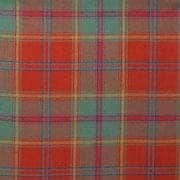
Since then, however, other Scottish mills have designed more Irish tartans based on area (but also now for Irish names – see below). So, in addition to the two Ulster tartans, three tartans have been designed for the provinces of Connaught, Leinster and Munster. In addition, a tartan has been designed for the region of Connemara in County Galway.
Finally, three “All Ireland” tartans make up the set of new regional setts for Ireland.

Irish National Tartan

Antrim

Clare

Donegal

Galway

Laois

Londonderry

Meath

Roscommon

Tyrone

Westmeath

All Ireland Blue

Armagh

Connaught

Down

Kerry

Leinster

Longford

Monaghan

Sligo

Ulster

Wexford

All Ireland Green

Carlow

Connemara

Dublin

Kildare

Leitrim

Louth

Munster

St Patrick

Ulster Red

Wicklow
All Ireland Red

Cavan

Cork

Fermanagh

Kilkenny

Limerick

Mayo

Offally

Tipperary

Waterford
Irish Name Tartans
Again, unlike in Scotland, great family names of Ireland like O’Neill or Kelly have no tartans associated with their names in the same way that there are Scottish family or clan tartans. But, again driven by demand from Irish people across the world, new ‘name’ tartans have been designed by Scottish mills. These include tartans for family names like Maguire, Lynch, Doyle, as well as for O’Neill and Kelly.
In total, there are just over 40 Irish name tartans now available, in addition to the Irish regional tartans.

Bowling Modern

Connolly Dress

Doyle Modern

Gallagher Modern

MacManus Ancient

Maguire Modern

O’Connor Royal

O’Keefe Modern

O’Rourke Modern

O’Sullivan Ancient

Teirney Modern

Brooke Ancient

Connolly Hunting

Fitzgerald Modern

Kiernan Modern

MacNamara Modern

Milligan Ancient

O’Connor Dress

O’Neill Red Modern

O’Shaughnessy Modern

Rafferty Modern
Saffron

Bryant Modern

Donnolly Modern

Fitzpatrick Hunting

Kelly Hunting

MacShane Ancient

Murphy Modern

O’Donoghue Modern

O’Neill Ancient

O’Sheehan Ancient

Shaughnessy Modern

Butler Modern

Dowling Ancient

Flynn Modern

Lynch Modern

MacShane Modern

O’Brien Modern

O’Farrell Modern

O’Reilly Modern

O’Sullivan Modern

Sullivan Modern
How do I find my Irish Tartan?
If you’re Irish and you want a tartan for your name, look first to your ancestry. Look to the county your family originates and choose that tartan or the tartan of the province in which your county resided.
Of course, if you have a name or are associated with a name that now has an Irish tartan, just take a look at what’s available here.
What can be made in Irish Tartans?
You can obtain pretty much any tartan product in an Irish tartan. You can purchase Irish tartan fabric, Irish kilts and Tartan Trews in Irish tartans. Although not every product on our website has an Irish variation yet, if you don’t see what you’re looking form just contact us.
Other Irish Tartans
Just because there are only Irish county and province tartans commercially available, does not mean, of course, that these are the only Irish tartans that have been designed and registered with the Registrar of Tartans.
Often tartans will be designed by individuals and registered with the Register of Tartans. These designs may be private and not available for the mills to create tartan cloth except by special arrangement.