

Campbell: Name and Tartans
Campbell: Clan and Tartan
If not perhaps the most popular highland clan, the Campbells are undoubtably one of the most successful. Certainly none has none has been more prolific in numbers and more distinguished in individual members.
The Campbell Earls of Argyll have traditionally enjoyed a rather unsavoury historical reputation, viewed by their rivals with a mixture of fear envy and respect.
In particular, clan Campbell’s success is often seen to have been built on the destruction of older and more prestigious regional lordships such as those of the MacDougall lords of Argyll and MacDonald lords of the isles.
But the Campbells were also at the centre of literature in western Scotland. They printed Columba’s message in its original Gaelic. They collected and printed folk-tales from the highlands and islands and left the island of Canna along with its library and folklore collection to the National Trust for Scotland.
Here are 6 Things About Clan Campbell plus a list and illustrations of the various Campbell tartans
1. Origin of the Clan
2. Name
3. Campbell of Argyll
4. Campbell of Breadalbane
5. Campbell of Cawdor
6. Glencoe Massacre
Origins
1 You’d think perhaps that the Campbell clan started off somewhere back in the mists of time by someone called Campbell or at least called something that looked or sounded like Campbell. And that is partly true. But, as it turns out, the clan’s beginnings were a bit more interesting than just that.
They began with the mysterious Diarmid O’Duibhne.
In Kintyre, western Scotland, lies the Hill of the Boar. Here, according to tradition, Diarmid O’Duibhne slew the fierce boar which had ravaged the district. The king, hunting with O’Duibhne, and feeling slighted by O’Duibhne’s kill, invited Diarmid to measure the hide with his bare feet. But the bore’s bristles were poisonous and when Diarmid stepped on one, he died.
Diarmid is said to have been the ancestor of the race of O’Duibhne who owned the shores of Loch Awe, in the land of the Gael. In Gaelic, the land of the Gael is Oire Gaidheal, which when Anglicised, becomes Argyll, and is the hereditary lands of the Campbells.
The race is said to have ended in the 11th century, with an heiress called Eva, daughter of Paul O’Duibhne or Paul of the Sporran, so named because, as Malcolm III’s treasurer, he is said to have carried the money bag.
Eva is said to have married Archibald Gillespie (or Gillespic) Cambel, to whom she carried the possessions of her house. This tradition is supported by by a charter of David II in 1368 which secured to Archibald Cambel certain lands on Loch Awe “as freely as those enjoyed by his ancestor Duncan O’Duibhne”.
Who Archibald was is of some dispute. Some say he was a Norman knight, De Campo del Bello, that came to Britain with William the Conqueror in 1066. And some sources say that an ancestor of O’Duibne married into the Beauchamps family in France, from which comes the Latin de Bello Campo. One of their sons, Archibald, came to Britain with the Conquerer and married his cousin, Eva.
Others point to the preponderance of men from Flanders (today’s Belgium) that fought with the Conquerer and made their way to Scotland. Archibald (from the Flemish, Erkinbald) was one such man and some say it was he who married Eva.
So we know Eva married Archibald, thus ending the line of O’Duibhne. But what about the surname, Campbell?
The Campbell Name
2 While the common theory of name derivation would point to Campo Bello, it’s often a misconceived (and nearly always wrong) method of extracting derivations of a name by mere similarity of a sound.
The respected 19th century Celtic historian, William Skene, maintained that the Campbells’ heritage was not Norman, but Celtic, and the many references to the name Campbell being derived from a personal characteristic, in the usual Gaelic fashion, would bear this out.
Many early Campbell references were to ‘Cambel’ and this would seem to confirm that Campbell is derived from the Gaelic cam beul meaning “crooked mouth” (in the same way as the name Cameron is derived from cam sron, meaning “crooked nose”).
The history books are silent however, on who crooked mouth actually was!
The name Cambel first appears in official Scottish records in 1266 when Gillespie Cambel is returned in the exchequer rolls as holding lands of Menstrie and Sauchie in Stirling. He also witnesses the charter of the erection of the burgh of Newburgh in Fife in 1266.
Cailean Mor, from whom the the chief of the House Of Argyll gets his patronymic of MacCailean Mor, was the real founder of the family of Argyll Knighted by King Alexander II in 1280, he had a quarrel with the MacDougalls of Lorn and the two forces met at a place called Ath Dearg (Red Ford) in Lorn, where he was slain in 1294. He was buried at Kilchrenan at Loch Awe.
MacCailean Mor, the patronymic of the Campbells, simply means son of big Colin and the first MacCailean is obviously his son, Niall.
Niall Cambell is often regarded as the real founder of the Argyll family. He married Robert the Bruce’s sister, Mary, and led the Campbells at Bruce’s great victory over the English at Bannockburn.
Campbell of Argyll
3 The origins of the Clan Campbell of Argyll date even to the early times of the old Scottish kingdom of Dalriada when these lands had evolved into the lands of Lorne and Argyll. At the the time their stronghold was a castle occupying an island in the loch called Innis Chonaill. The castle still stands today, under the peaks of the Cruachan Beann, the hill that gave the Campbells their battle cry.
In 1474, Colin Campbell, 1st Earl Argyll, moved his stronghold to Inveraray, on the shores of Loch Fyne. His king, James III, raised him to Lord Chancellor and Master of the Royal Household, although this did not stop Campbell from aiding rebel lords opposed to James and killing him at the Battle of Sauchieburn in 1488.
Campbell’s son, the 2nd earl, was killed along with his king, James IV, at the tragic and terrible battle of Flodden in 1513.
The 8th earl was created 1st Marquis of Argyll and became the leader of the Covenanters, who opposed Charles I’s attempt to impose the English Book of Common Prayer on the Scots kirk. He avoided death at the hands of the king’s Captain-General, James Graham, 1st Marquess of Montrose (the Great Montrose) and went on to bring Montrose to execution in Edinburgh in 1650. However Argyll’s fortune waned when the monarchy was restored in 1660 and Argyll himself was beheaded by the Maiden (the Scottish guillotine) in Edinburgh in 1661.
The family’s fortunes were restored when the Catholic James VII was deposed by Charles I’s calvinist grandson, William of Orange.
It was the third duke of Argyll that built the new castle at Inveraray. It may still be visited today and is well worth seeing. The design was based on a sketch by John Vanbrugh, the architect who design Blenheim Castle and Castle Howard in England with the classical interiors the work of Scottish architect Robert Mylne, a contemporary of the great Robert Adam.
The castle was restored after a fire by the 11th duke of Argyll and 25th Mac Chailein Mor.
Campbell of Breadalbane
4 The Campbell of Breadalbane trace their family back to Sir Colin, son of Sir Duncan Campbell of Lochow. He received the lands of Glenorchy and, through his marriage to a daughter of Lorn, a third of the lands of Lorn. He built Kilchurn Castle in1440 and for his valour in Palestine he was made a Knight of Rhodes.
The lordship of Lorne, which the MacDougalls had lost after their opposition to Robert Bruce’s claim to the throne, had passed to heiresses of the Stewart family and Margaret Stewart, one of these co-heiresses married Sir Colin, the lands passed to the Campbells. He built the Kilchurn Castle in 1440 and the lands and castle enabled him to found the cadet branch of the Campbells of Breadalbane. Breadalbane’s chiefs are called Mac Cailein Mhic Dhonnachaidh (Son of Colin Son of Duncan), after Sir Colin.
Sir John Campbell, the 11th of Glenorchy was created Earl of Breadalbane by King Charles II in 1681. Campbell was described as cunning as a fox, wise as a serpent and as slippery as an eel. During the reign of William III, he was employed by the king to bribe the highland clans to submit to the king (although it’s often said that he kept the money and forced the clans to submit by threats). He died in 1716 after living through some of Scotland’s most turbulent times, including the Treaty Of Union between Scotland and England. Campbell, it should be noted, voted against the subsequent Act of Union in the Scottish parliament.
In the 19th and 20th centuries, the Campbells of Breadalbane were granted titles outside of Scotland and the earldom was raised to a Marquessate, ie the holder would become known as the Marquess of Breadalbane. The line of Breadalbane failed three times during this period when the titles outside Scotland were lost because the holder died without issue (having no sons or daughters).
Campbell of Cawdor
5 The founder of the Cawdor (Calder) branch of the Campbells was Sir John, the third son of the 2nd Earl of Argyll, who married Muriel, the flame-haired daughter of Sir John Calder of Calder, Thane of Cawdor, in 1510. However, this was no ordinary story of courtship and wooing.
Muriel was a surviving twin. Her father had died after his wife had fallen pregnant and thus she became an heiress while an infant. As an heiress, a bargain was struck with the Earl of Argyll that he would protect her as his ward. He duly sent a kinsman, Campbell of Inverliver with 60 men to bring her to his castle at Loch Awe. Before he arrived, legend has it that her mother branded her thigh with a key and a nurse bit off a part of the child’s little finger, both to aid future identification.
Muriel’s uncles however, were having none of the wardship and fought the Campbells, killing seven of their number. It was put to Inverliver that the child might die in the fighting but Inverliver reputably replied that the heiress would never die, “sae lang as there’s a red-haired lassie on the shores of Loch Awe”.
Supposedly however, it was the real heiress that grew to the age of 13 when she was married to the aforementioned third son of Argyll. Sir John in 1510. No mention was made of her branding or deformity.
Cawdor castle stands (and still stands) in the lands of the Moray Firth, near the town of Nairn. It’s said that Campbell selected the site for his castle by loosing a donkey laden with gold, and settled on the spot that the donkey came to rest. A hawthorn tree was planted on the spot, which can still be seen today in the vaults of the castle.
The Cawdor Campbells gravitated to Wales following Sir Alexander’s and his son John’s marriages to Welsh heiresses. In 1796 John Campbell was created Baron Cawdor of Castlemartin in Pembrokeshire. The second baron was created Earl of Cawdor after George IV’s visit to Stackpole in 1827.
The Cawdor Campbells have been awarded no less than three Victoria Crosses for Gallantry (the highest military award).
And if you find yourself in Moray, take time to visit that gem of Scottish baronial architecture, Cawdor Castle.
The Massacre of Glencoe
6 Although by no means the worst massacre or mass killing perpetrated in the highlands, the killing of a small clan of MacDonalds at the hands of soldiers in whose ranks were actually only a few Campbells, has resonated down the centuries. The idea of troops asking for and being given shelter and food in the middle of a cold winter in one of the most inhospitable glens of Scotland then turning on and killing their hosts is no doubt a factor in keeping the story – and the songs and plays and movies alive, even today.
The ascent to the throne of England by William of Orange and his wife Mary, the daughter of the outgoing king, James VII and II went without a hitch. It’s not called the Glorious Revolution for nothing. But in Scotland, things weren’t so easy. The highlands gave their allegiance to the exiled king and a rising in 1689 led by Bonnie Dundee, John Graham of Claverhouse, was finally defeated after Dundee’s death at the battle of Killiecrankie and the rout of the rebels at the battle of Cromdale.
As a result of the uprising, the government hurriedly built its great fortress of Fort William at the head of Loch Linnhe and continued to deploy soldiers in the highlands at strategic points. But William could ill afford soldiers stationed in Scotland – they were needed in Flanders for his war against France. What to do?
Into the story steps the first Campbell of the Glencoe story, the slippery and cunning John Campbell, Earl of Breadalbane. The plan was to bribe the clan chiefs in return for their oaths of loyalty and Breadalbane was trusted with over £12,000 pounds for the task. But it largely failed and whether he ever gave over any of the money is questionable, relying instead on threats. William himself didn’t like the idea of buying loyalty and in 1691 offered a pardon for all who pledged their allegiance by January 1, 1692.
But as the winter wore on without any significant progress, William’s secretary of state, Sir John Dalrymple, Master of Stair, planned a different method of persuasion. Stair, Lord Advocate of Scotland, made preparations for a bloody coercion of the clans – ‘the use of fire and sword’ – particularly on the MacDonalds, for few men, he thought would care about them.
The MacDonalds chosen for the slaughter were not the great MacDonald clans of Keppoch or Glengarry but a small branch located in Glencoe. Their chief, Alisdair MacDonald known as MacIain, had been 5 days late in pledging his allegiance to William and Stair pounced, declaring that he was ‘glad that Glencoe did not come in the time prescribed’.
The killings were carried out by two companies of the Earl of Argyll’s regiment under the command of Captain Robert Campbell of Glenlyon. Campbell was a drunkard and a bankrupt and was under pressure of treason if he did not carry out this last assignment (he was over 60). In a bizarre twist, Campbell was actually related to MacIain’s second son by marriage but hated the MacDonalds, blaming them for his bankruptcy and his forcing of joining his kinsmen’s regiment at the age of 60 to pay his debts.
He took his companies into Glencoe at the beginning of February 1692 and asked for quarters. Whatever the hostility between clans, highland hospitality was always freely given. At 5am on February 13, on orders from Breadalbane himself, Campbell turned his soldiers on the MacDonalds.
The massacre was botched though, by a terrible snowstorm and Campbell’s ineptitude and he failed his orders to ‘put all to the sword under seventy’. MacIain was killed, but his sons and grandson escaped. Thirty eight members of the MacDonald family were systemically killed, and the women and children who ran perished in the snows, naked after having been stripped by the soldiers.
At the enquiry afterwards, Breadalbane was jailed but subsequently released after the king vouched for him. Stair, discredited but unrepentant, resigned his post.
The botched massacre did not quell the Jacobites. Indeed it fuelled the cause, culminating in the Jacobite rebellion of 1715, where, ironically, the MacDonalds of Glencoe fought alongside the Glenlyon Campbells in their quest to restore the Stuart monarchy.
Campbell Tartans
The Clan Campbell is spread wide and it is difficult to see how the many branches could have evolved such closely related patterns had they done so spontaneously. It’s likely at least some of them may have a common origin in an early uniform.
The most widely used Campbell tartan is that of Campbell of Argyll (sometimes known as Campbell of Lochawe). The pattern foundation of Campbell of Argyll is the Black Watch tartan, with an alternate white and a yellow line centred on the green band.
W&A Smith, in their book, The Authenticated Tartans of the Clans & Families of Scotland thought it the oldest of Campbell designs, which lent support to clan members who claim that the Black Watch tartan is essentially a Campbell tartan. It’s a moot point as there is no great evidence either way to say conclusively.
The earliest tartan of the Campbells of Breadalbane was worn by the Fencibles of Breadalbane (the Fencibles – ‘Defencibles’’ – were British army regiments raised in the late 18th and early 19th centuries) and it’s thought it’s similarity to the old military tartan was simply chosen as a civilian counterpart.
The Cawdor pattern appeared at the same time as the Breadalbane tartan. The blue overcheck was originally light though, and the red was edged with black.The Campbell tartans are available in accessories or garments, and the Campbell clan crest is available in our clan jewellery. To choose your Campbell tartan accessory or Campbell tartan garment, please visit the Campbell tartans accessory page.
Campbell Clan
Modern

Campbell Clan
Ancient

Campbell Clan
Weathered

Campbell Dress
Modern

Campbell Dress
Ancient

Campbell Old
Weathered

Campbell Old
Ancient

Campbell of Argyll
Modern

Campbell of Argyll
Ancient

Campbell of Argyll
Weathered

Campbell of Breadalbane
Modern

Campbell of Breadalbane
Ancient

Campbell of Cawdor
Modern

Campbell of Cawdor
Ancient
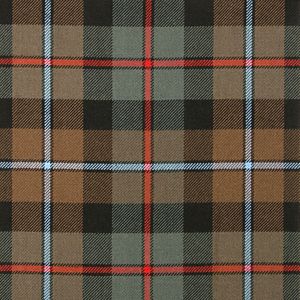
Campbell of Cawdor
Weathered

Campbell of Louden
Modern