fbpx
Barclay: Name and Tartans

Barclay: Name and Tartans

The Scots Barclay Clan originated in the 11th century and was primarily located in the lands of Aberdeenshire and Kincardineshire. Their name was originally de Berkeley and came to Scotland via the Norman invasion of England in 1066.

Barclay Name Origins

There are two competing views of where the Barclays of Scotland originated. Historians and genealogists often point to Berkeley in Gloucestershire as their origin. Another theory, supported by historian, GWS Barrow, points to the small village of Berkley in Somerset.

It’s generally accepted that the Barclay name is French in origin, from /beau/ (beautiful) and /lie/ (meadow) and then Anglicised to Berchelai. Its introduction to England is generally held to be from a Roger de Berchelai who came to England with William the Conqueror in 1066.

It was from Roger’s son, John, that one of the main Scottish Barclay families, the Barclays of Towie, is descended. John came to Scotland in 1066 when he accompanied an English princess, Margaret of Wessex, on her escape from England after the Norman conquest.

She fled England with her brother Edgar Aetheling, the uncrowned last Saxon king of England, and landed in Scotland. Here, she married the king of Scots, Malcolm III and Malcolm granted lands in Scotland to her followers: John de Berkeley was granted the lands of Towie (or Tollie) in Kincardineshire.

The competing view is that the de Berkeleys came north to Scotland not with Margaret of Wessex, but with Maud of Len, who married King David I of Scotland.

In fact there are several competing views and sources of the origins of the Scottish Barclays so it’s likely that they are are descendants of more than one migration from England to Scotland from the eleventh to thirteenth centuries.

The Barclay Families and Names

The early Barclays (or de Berkeleys) appear to have inherited or have been granted lands in four areas of north-east Scotland and in south-west Scotland. The lands are Gartly, Mathers, Urie , Towie and Pierston.

Walter de Berkeley

There’s little doubt that the first prominent Barclay in Scottish history was Walter de Berkeley. Depending on which version of history you read, he was either the grandson of John de Berkeley who came to Scotland in the 11th century with Margaret of Wessex or he came to Scotland himself with his brother from Berkely in Somerset, England in the mid 12th century.

Whichever is correct, Walter de Berkeley of Gartly was appointed Great Chamberlain of Scotland in 1165 by King William I (The Lion). He is said to have founded the Berkeleys of Gartly. His marriage to Eve, the daughter of Uhtred, lord of Galloway brought him lands in this area, and they had three children, John, who died soon after his father in 1189, and two daughters.

One of these daughters, Agatha, married Humphrey, son of Theobald de Adeville. Upon his marriage, Humphrey took his wife’s name and became a Berkeley.

Humphrey de Berkeley

Charters from the reign of William the Lion show that the king granted the estates of Laurencekirk and Fordoun to Humphrey and Humphrey (Umfridus Humphrey de Berkeley) is mentioned in the foundation charter of Arbroath Abbey. Humphrey was succeeded by his brother, John, who promptly turned out all the monks from Arbroath Abbey!

John’s great-grandson, Alexander, Alexander, acquired the great estates of Mathers when he married Katherine Keith, sister of the Earl Marischal of Scotland. Their son, David, laird of Mathers, was charged, along with four other lairds, of the murder of John Melville, the sheriff of the Mearns. It is said that David’s son, Alexander, was the first to spell the family name, Barclay.

David Barclay

in 1306, Sir David Barclay of of Cairny-Barclay and Brechin was captured by the English after fighting for Robert the Bruce the newly crowned king of Scots, at the Battle of Methven. It was likely that he was released soon after as his name does not appear on the list of prisoners ransomed after Methven.

His son was a loyal servant of King David II, Bruce’s son, and in 1341 David ordered him to arrest his Lord Chamberlain, Sir William Bullock, who he suspected of treason. Having previously killed a member of the powerful Douglas clan, John Douglas, Bullock took his revenge by instigating David’s assassination by the Douglases.

Meanwhile, the line of Gartly, Walter the Chamerlain’s) died out in1456 when hie died without issue. His sister, however, married the Laird of Towie Barclay, carrying the chiefship to the Towie-Barclays.

The Mathers and Urie Barclays

For the Barclays of Mathers, their ownership of most of their ancestral lands came to an end through the extravagance of the 12th laird of Mathers, David Barclay. Born in 1580, his high living at court and general extravagance forced him to sell not only the estate of Mathers but also the old patrimonial lands, which had been in the family for nearly 500 years.

His third son, also David, became his heir after his older brothers, John and Alexander died young. He served with distinction with, among all people, the Swedish king, Gustavus Adolphus during Europe’s 30 Years’ War, achieving the rank of major. He joined the army on his return home and became a colonel, fighting for King Charles I against Oliver Cromwell. After retiring from the army, he purchased the estate of Urie, in Kincardineshire.

Barclay had been imprisoned for a short time by Cromwell and there had become a Quaker. His son Robert, also a fervent Quaker, published /Apology for the True Christian Divinity/, a rationale for Quaker thinking and a defence of the Quaker faith. He was also appointed Governor of East New Jersey and also made many missionary visits throughout Europe, often in the company of William Penn.

Robert’s grandson, David, was one of the founders of Barclay’s Bank.

The Towie-Barclays

The Barclays of Towie (or Tollie) are s said to have descended from the aforementioned John de Berkeley who is supposed to have received his lands from King Malcolm III for his son Alexander, about 1100. The estate remained in the family until the 18th century when it sold by Charles Maitland, brother of the Earl of Lauderdale. Maitland married the last heiress of the Towie-Barclays in 1752 and took her name, appending it to his and becoming Maitland-Barclay.

From this ancient family the celebrated Russian general, Field Marshall Prince Barclay de Tolly was lineally descended. In 1621, John and Peter Barclay of Banff, emigrated to the Baltic states to start an import business. (Their letter of safe passage from the laird of Towie is still in the possession of Barclay descendants in the Baltic today).

From Peter’s descendants, Michael Andreas Barclay de Tolly was born in 1761. Joining the Imperial Russian Army, he was made Minister of War in 1810. When Napolean invaded in 1812, Barclay de Tolly initiated the famous ‘scorched earth policy’, retreating from Napolean and laying waste to the land in his wake.

He became Commander-in-Chief of the Russian Army for the second time in 1813 after the death of Marshall Kutuzov and led the taking of Paris for which he was made a Field Marshal. His died on a visit to Germany in 1818.

Barclays in South Western Scotland

Another branch of the family had settled in south-west Scotland. The Barclays of Pierston are an ancient family of Ayrshire and of distinction as early as the 12th century. Five hundred years later, in 1688, Sir Robert Barclay of Pierston was created Baronet of Nova Scotia. Sir David Edward Durrell Barclay, the present representative is the twelfth baronet.

The Barclays of Ardrossan were also an old family of Ayrshire. In 1471, the line of this branch of the Barclays terminated in an heiress, who married Malcolm Crawford of Greenock, of the family of Crawfurn of Kilbirnie.

Barclay Tartans

There is no recorded Barclay tartan before its appearance in /Vestiarium Scoticum/, where the green Hunting version is recorded. The Dress tartan appears much later, and, as is usual with the so-called ‘dress’ tartans, the Victorians probably took its rather bright yellow colours from ladies evening dress colours and turned into men’s evening dress.

The tartan is a symmetrical sett and pivots around the small red and green threads for the Hunting and the white and yellow for the Dress.

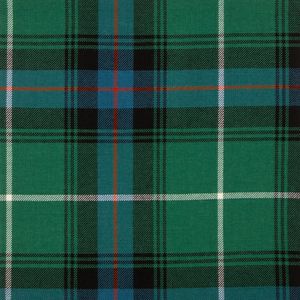
The Hunting tartan, available in Ancient and in Modern, features a large blue and green check with a green overcheck on the blue and a red overcheck on the green with a threadcount of (ancient) R2G32B32G2.

The Dress tartan features a large black and yellow checks overchecked with white and yellow resulting in a threadcount of W2Y12K12Y2. The colours of the dress tartan are unusual in that only two other clans record yellow in their tartans: the MacLeod and the dress MacLachan. Given this, you might think there would be some connection between Barclay and either or both MacLeod and MacLachlan, but there appears to be none.

The three Barclay tartans are available in accessories or garments, and the Barclay clan crest is available in our clan jewellery. To choose your Barlay tartan accessory or Barclay tartan garment, please visit the Barclay tartans accessory page.

barclay hunting modern tartan

Barclay Hunting Modern

barclay dress modern

Barclay Dress Modern

Barclay Hunting Ancient

Barclay Hunting Ancient

View Barclay tartan accessories, garments and clan jewellery

Anderson: Name and Tartans

Anderson: Name and Tartans

The Anderson Name and Origins of Clan Anderson

Anderson, and its Gaelic equivalent, MacAndrew, have complex origins. The family is a member of the Ross clan, which, in the mists of time past, took as their clan name Aindrea (Andrew). It’s quite probable, given the closeness of the northern county of Ross-shire to the north coast, that the name has Danish (or Viking!) origins.

The name, Gillander / Gillanders could be derived from the Gaelic Gilleandrais, which means servant of Andrew. Alternatively, however, Gillanders is also of Norse extraction and can be found in common usage today in Scandinavia as Silander and Andersen.

The name, Anderson, simply means Andrew’s son or son of Andrew. This form of name, where ‘son’ is added to the father’s namei is called a patronymic surname. In Scotland, the Gaelic patronymic is formed by adding mac to the beginning of the father’s name. Hence Anderson is also MacAndrew.

Anderson, as well as son of Andrew, is also taken to mean ‘servant of St Andrew’. St Andrew is the patron saint of Scotland. In Gaelic, the form is Gilleandrais – St Andrew’s gillie (gillie is Gaelic for servant). And so, son of Gilleandrais is MacGillandrish.

Clan and Associations

The Anderson family is most often linked to Clan Ross. The old Gaelic name used by Clan Ross is Siol Aindrea or Clan Aindrea, meaning the race of Andrew.

Oddly enough – and further complicating matters – there is evidence of a MacAndrew link to that great federation of clans, Clan Chattan. A Donald MacGillandrish is referenced in an old text written by Lachlan Mackintosh in 1679, called the Kinrara Manuscript. The manuscript (itself sourced from three older manuscripts) records a Donald MacGillandrish as coming from Muidart (that’s Moidart on the west coast) with Mora Macdonald, Lady Mackintosh, to Connage of Petty. Connage is a village a few miles north of Inverness, in the district of Badenoch. The link from Mackintosh to Clan Chattan is that Mackintosh is often regarded as the ‘stem-family’ of Clan Chattan.

But it is the Ross clan that Anderson and MacAndrew are most often associated, or considered to be a part of the clan.

Crest Badge

The wearing of the clan’s crest on a badge is a custom that is recognised in Scots heraldic law. Clan chiefs would give their followers a metal plate of their crest to wear as a token of their connection to the clan and the chief. The plate would be fixed to the person’s clothing by a strap and buckle, and when not in use the strap and buckle would be wound around the plate.
Nowadays, instead of wearing a plate with belt, people wear the crest on a badge. The clan crest badge of Anderson takes the form of the oak tree crest in the middle of the badge with a metal representation of belt and strap encircling the crest. The clan motto, Stand Sure, is engraved onto the belt.

The badge shows that the wearer is a kinsman or a follower of the clan chief. Only the chief of the clan and his heirs are entitled to wear the crest without the belt.

Famous Andersons & MacAndrews

The Tale of Little John MacAndrew

One of the most noted MacAndrews in the family history was a bowman, Iain beag MacAindra who lived in the seventeenth century in the lands of Kelravock in Badenoch. (Iain beag MacAindra, by the way, translates to little John MacAndrew).

In 1670, a raiding party of MacDonnels stole 12 head of cattle from the farm at Kelravock. It was a highland custom at the time to steal or ‘lift’ cattle before a marriage, and the raiding party’s leader, McDonnel of Achluachrach, was indeed engaged to be married.

The tenants of the farm, one of whom was Iain beag MacAindra, who looked after the cattle set off in hot pursuit. They found the MacDonnels sheltering in a bothy or hut and that they had feasted on one of the stolen cows before settling down for the night. As the pursuers crept quietly up to the bothy door, MacAindra took the slaughtered cow’s hide and placed it, hairy side down, at the the door and shot an arrow in through the window.

At once, Achluachrach rushed from the door and slipped on the slippery hide and was shot by a single arrow from MacAindra. Once the hut door was open, a shower of arrows from MacAindra and his kinsmen killed all the MacDonnels. During the fight, the leader of the pursuers, William Mackintosh of Kellachie, shouted, “God and victory be with you, Iain MacAindra!”. Little John, aghast at this revealing of his name, fearful as he was of repercussions from the powerful MacDonnels, shouted back, “A thousand curses on your tongue, squint-eyed John of Kellachie”.

MacAindra was proved right. Although none of the MacDonnels in the bothy survived, the sentry did and on his return home told the clan that it was MacAindra who had killed Achluachrach, for which the MacDonnels vowed bloody revenge. Although he escaped being killed, Little John MacAindra spent the rest of his days hiding from the MacDonnels, still cursing the loose tongue of ‘squint-eyed’ John Mackintosh of Kellachie.

James Anderson of Sterheuch

Concentrated in the county of Aberdeenshire, the Anderson name is well known in the area and came to prominence here in the 16th century. One of the earliest references was to a James Anderson of Sterheuch.

In 1527, he was appointed by King James V to the position of Carrick Pursuivant of Arms. At the time, it would have been inconceivable to have held such a position at the Court of the Lord Lyon without your own family arms. And it seems that arms were indeed granted to an Anderson of that Ilk but, interestingly, this family has never been identified as no place exists called Anderson!

‘Of that Ilk’ is used by the Scottish nobility as a kind of shorthand to avoid repeating the clan name which matches the fief or place where the clan originated. For example, the family name of Moncreiffe of Moncrieffe is traditionally shortened to Moncrieffe of that Ilk.

In Anderson’s case, it seems likely that the Lord Lyon simply used the Crown’s armorial prerogative to receive and number Anderson as the representative of the name in order to confer the arms.

Alexander and David Anderson

Alexander Anderson was a mathematician and Professor of Mathematics in Paris. He published his six works on Geometry and Algebra there, between 1612 and 1619. His cousin David Anderson was an architect and a merchant who had an interesting claim to fame. He’s famous as ‘Davie-Do-a’-Things’ (ie David who does everything) and the man who figured out how to remove a massive rock that had obstructed the entrance to Aberdeen harbour! You can see his portrait at the National Gallery in Edinburgh. He left an endowment after he died to found a school for ten poor orphans in Aberdeen. David’s daughter was the mother of the mathematician and astronomer, James Gregorie.

Adam Anderson

Adam Anderson was appointed one of the trustees for establishing the colony of Georgia in 1732. Many Scotsmen of course emigrated to the colonies (as the US was called before the War of Independence) and, in Georgia helped to build and hold the fort there against Spanish attack. The famous civil war prison of Andersonville was named after Adam. But it is a scientific study of commerce that Adam Anderson is to be remembered. His Historical and Chronological Deduction of the Origin of Commerce was published in 1765, shortly before his death.

James Anderson

James Anderson was a noted author and historical of his day. Living in18th century Scotland, he was a vociferous opponent of the 1707 Treaty of Union between Scotland and England. In 1705, trying to sway opinion, he wrote his famous work, An historic Essay Showing the Crown and Kingdom of Scotland is Imperial and Independent.

The Candacraig Andersons and other Andersons

The descendants of Patrick Anderson’s family held the land of Candacraig in Strathdon for 10 generations. Anderson bought the land in 1620 and the family held it until they emigrated to Canada in the 19th century.

After the restoration of the monarchy following Charles II’s coronation in 1651 at Scone (actually the last coronation at Scotland’s ancient coronation site), John Anderson of Dowhill was appointed Lord Provost of Glasgow in 1665 and again in 1667.

An Alexander Anderson established the North of Scotland bank in 1836. In the 1840s he overcame great opposition to promote the arrival of the railway to Aberdeen. He was elected Lord Provost of Aberdeen and in 1863 was knighted by Queen Victoria’s husband, Prince Albert.

north of scotland banknote

In the west of Scotland, William Anderson of Stobcross gave the family name to the district of Anderston (Andrew’s town) in Glasgow.

In the 20th century, John Anderson of Edinburgh achieved high political office in Winston Churchill’s wartime cabinet, serving as home secretary, Lord President of the Council and Chancellor of the Exchequer. Interestingly, he was the last person to achieve high political office in the UK as an independent MP, ie he was not a member of a political party.

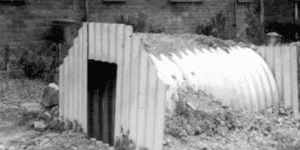
He is particularly remembered by the dwindling band of people in the UK who lived through World War II as the man behind the creation of the Anderson shelter, the little shelter that people erected in their gardens to take cover from falling enemy bombs.

anderson shelter

Anderson Tartans

The origin of the Anderson tartan is unknown but the type of pattern suggests that it had its base in one of the ‘fancy’ types of design that were becoming popular in the few years immediately preceding the visit of King George IV to Scotland in 1822. In these times, when the tartan revival was beginning to gather some momentum, there was a ready sale of ‘fancy’ patterns when they could be worn for reasons of preference. Several of these tartans passed to posterity as clan tartans.

The elaborate pattern gives the impression of being made up of elements from older designs and slight variations on the sett (a pattern is typically called a ‘sett’ by weavers) can be apparent when tartans are compared.

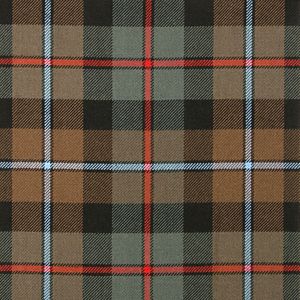
There are three Anderson tartans currently available: Modern, Ancient and Weathered. The modern and the ancient tartans are available in accessories and the Anderson clan crest is available in our clan jewellery. The weathered cloth is currently available only as a heavy cloth, suitable for the heavyweight kilt.

To choose your Anderson tartan accessory or Anderson tartan garment, please visit the Anderson tartans accessory page.

Anderson Modern

Anderson Modern

Anderson Ancient

Anderson Ancient

Anderson weathered tartan

Anderson Weathered

View Anderson tartan accessories, garments and clan jewellery

MacDonald: Name and Tartans

MacDonald: Name and Tartans

MacDonald: Clan and Tartan

Clan Names

Donald, MacDonald, MacDonnell and Donaldson are all surnames related to the great Clan Donald.

MacDonald (or Mhic Domhnall), is a Gaelic patronymic and means son of Donald or Donald’s son. Donaldson is the Anglicised version.

Clan Donald is the largest of the highland clans and has played a conspicuous part in Scottish history.

Clan History

The Lords of the Isles

In the 1100s, the Vikings’ grip on Scotland’s western isles was being loosened by the Scots, led by the mighty Somerled. Through his marriage to Ragnhildis, the daughter of Olaf the Red of Norway, Somerled had three sons: Dugall, Reginald (Ragnall) and Angus. It was Ragnall who, on his father’s death in or around 1164, assumed the title of Lord of the Isles.

Ragnall, who died in 1207, also left three sons, Donald (or Domhnuill) , Roderick (or Ruari) and Dugall, all of whom inherited their shares of the islands. Through Dugall descends the MacDougalls of Argyll and Lorn; through Ruari descended Clan Ruari, and through Donald, the great Clan Donald, sometimes referred to as the MacDonalds of Islay.

About this time, patronymics came into existence in the highlands of Scotland – in the lowlands surnames were generally territorial. The branches of Somerled’s family, in order to avoid confusion, adopted the patronymics of MacRuari, MacDougall, and MacDonald.

Donald was the name-father of Clan Donald, or Clann Domhnuill in Scottish Gaelic. Domhnuill is a combination of two words: Domh, ‘house’, and Nuall, ‘noble’, together signifying Noble House, an apt description of the clan which ruled Scotland’s Western Isles for over 500 years.

Donald’s two sons were tall, and their friends and family called them Big Angus and Big Alisdair. In Gaelic, ‘mor’ is the word for big, so they were called Angus Mor and Alisdair Mor, and from Alisdair descends the clan Alistair, the MacAllistairs of Loup.

Donald, the progenitor of the clan, died in 1289 and was succeeded by his elder son, Angus. Like his father, Angus had two sons, named Alexander and Angus. Because the young Angus had the same name as his father, he was known as Angus Og – Gaelic for young Angus. When the boys grew up, their paths in life diverged, as each followed a different leader.

Angus’s older brother, Alexander allied himself to John, Earl of Lorn in his opposition to Robert the Bruce, a stand that was eventually to led to his imprisonment by Bruce in Dundonald castle, where eventually he died. His possessions were forfeited to the crown and later given to his brother, Angus.

Angus, in contrast to his brother Alexander, sided with Bruce, and became a great ally of the future king. It was Angus Og that sheltered the newly-crowned king after the loss of the battle of Methven in 1306 and who fought to protect his king in the fight with the Earl of Lorn at Tyndrum, where Bruce and his followers had fled after Methven.

Angus Og MacDonald fought alongside Robert the Bruce

From this time on, Angus was a loyal and important ally of Bruce in the wars of independence, culminating at the battle of Louden Hill and, in 1314, at the great Battle of Bannockburn, where Angus led the reserve of 5,000 soldiers that helped turn the battle against Edward II of England.

The MacDonalds ruled as Lords of the Isles until, In 1493, their title was declared forfeit by King James IV after the clan chief, John MacDonald, was found to have made a secret alliance with England’s King Edward IV. The Earldom of Ross, which his father, Alexander, had gained following the death of his mother, the Countess of Ross, was annexed to the crown. John died without children in 1498.

The various branches of Clan Donald split and evolved under their own chieftains. The main branches were Clan Donald of Sleat (in Skye), Clanranald (in Moidart, Glengarry, Lochaber and Glencoe), with MacDonalds of Glengarry adopting the spelling MacDonnell.

Clan Donald included, besides Glengarry (the chief of the clan), the families of Keppoch and Glen Coe, although these were virtually independent and paid little heed to the authority of their chief. During the seventeenth century, all however, acquired a bad name for cattle raiding.

This general lawlessness may also have prevented them from acquiring a position of leadership within the clans and they never achieved the status of, say the Campbells for several hundred years or by the Camerons in the 17th and 18th centuries. There was also a long feud with the MacLeods, which culminated in the whole MacLeod population of the island of Eigg being suffocated in a cave in which they had taken refuge.

Just as vicious is the legend of Alan with the Red Jacket, when, in a terrible avenging of the death of the nephew of Glengarry, he ordered several hundred Mackenzies barricaded inside a church which was then set alight.

But after the ascension of James VI to the throne, the highlands were reduced to a comparatively lawful and orderly region, and clan feuds ceased to become a menace to society. Instead, they were slowly to become pawns in the wars between kings, parliamentarians and covenanters.

In 1688, King James VII (and II of England) was deposed and William and Mary were elected to the thrones of Scotland and England. In the fight to restore James to the throne, the whole MacDonald clan joined Viscount Dundee (Bonnie Dundee) in the fight to restore James. But, defeated at Killiecrankie and then at the Haughs of Cromdale, they retreated to their homes.

This rising however, was not passed over lightly and John Dalrymple, Earl of Stair and Secretary of State, decided to teach the clans a lesson. The government issued a proclamation to the chiefs of the clans to take the oath of allegiance to King William by not later than 1 January 1692. By that date, two chiefs had still not taken the oath, one of them being MacIan MacDonald of Glencoe. In fact, weather had prevented MacIan from reaching Inverary and he didn’t take the oath until the 6th of the month – which gave William the opportunity he needed.

Put all to the sword under seventy

A company of the Earl of Argyll’s regiment, commanded by Robert Campbell, was sent to Glencoe and billeted in the clan’s cottages. As it happened, Campbell was related by marriage to MacIan. But on 12 February, Campbell received his infamous orders: ‘Put all to the sword under seventy; you are to have a special care that the old fox and his sons do not escape’. Eight hundred troops blocked the southern and northern exits from the glen and parties of Campbell’s soldiers went from house to house, slaughtering as they went. In all, around 30 were murdered in cold blood and the killings indirectly were one of the main causes of the Jacobite risings in 1715 and 1745.

At the end of the second Jacobite rebellion, in 1746, the MacDonalds gathered at Culloden, along with the rest of Prince Charles Edward Stuart’s army. In what they perceived as a slight, they were positioned on Prince Charlie’s left rather than his right, took the huff and ignored the Lord George Murray’s initial charge against the government troops. When eventually they did advance it was over muddy, boggy ground and their fate, as the other clans’, was sealed by government rifle fire.

After Culloden, the highlands were crushed and the people thrown off their ancestral lands. Indeed, the victor of Culloden, the Duke of Cumberland, urged wholesale deportation of the entire MacDonald clan. But most brutal, even than government persecution, were the evictions and deportations of the people at the hands of their own chiefs. The MacDonalds suffered as much as the other clans: MacDonald of Sleat sold members of his own clan as indentured servants to landowners in the Carolinas. On Skye, the estate factors of Lord MacDonald were relentless in their duties: in 1769 every single tenant left the lands of MacDonald of Sleat forcing the chief to import others from the mainland.

The last clan chief who bore the title Glengarry was Alisdair MacDonnell of Glengarry, who was credited with introducing the Glengarry bonnet. You can see Henry Raeburn’s famous portrait of Glengarry, resplendent in the tartan that his own people had been banned from wearing, if you visit the Scottish National Gallery in Edinburgh.

Succession of the clan passed to the Sleat branch and one member of the family was created a Baronet of Nova Scotia. In 1910, Sir Alexander MacDonald proved his right to be the 14th Baronet of Sleat, 21st chief of Sleat.

MacDonald Tartans

There are many MacDonald tartans. Here we have listed 25 MacDonald tartans that are commercially available today.

To choose your MacDonald tartan accessory or MacDonald tartan garment, please visit the MacDonald tartans accessory page.

macdonald clan modern

MacDonald Clan Modern

MacDonald Clan Ancient

MacDonald Clan Ancient

MacDonald Dress Modern

MacDonald Dress Modern

MacDonald Dress Ancient

MacDonald Dress Ancient

MacDonald Clan Weathered

MacDonald Clan Weathered

MacDonald Dress Weathered

MacDonald Dress Weathered

MacDonald of Clanranald Modern

MacDonald of Clanranald Modern

MacDonald of Clanranald Ancient

MacDonald of Clanranald Ancient

MacDonald of Clanranald Weathered

MacDonald of Clanranald Weathered

MacDonald of the Isles Modern

MacDonald of the Isles Modern

MacDonald of the Isles Ancient

MacDonald of the Isles Ancient

MacDonald of the Isles Modern

MacDonald of the Isles Hunting Modern

MacDonald of the Isles Hunting Ancient

MacDonald of the Isles Hunting Ancient

MacDonald of the Isles Red Modern

MacDonald of the Isles Red Modern

MacDonald of the Isles Red Ancient

MacDonald of the Isles Red Ancient

MacDonald of the Isles Hunting Weathered

MacDonald of the Isles Htg Weathered

MacDonald of Sleat Modern

MacDonald of Sleat Modern

MacDonald of Sleat Ancient

MacDonald of Sleat Ancient

MacDonald of Ardamurchan Modern

MacDonald of Ardnamurchan Modern

MacDonald of Ardnamurchan Ancient

MacDonald of Ardnamurchan Ancient

MacDonald of Keppoch Modern

MacDonald of Keppoch Modern

MacDonald of Keppoch Ancient

MacDonald of Keppoch Ancient

MacDonald of Staff Modern

MacDonald of Staffa Modern

MacDonald of Kingsburgh Ancient

MacDonald of Kingsburgh Ancient

MacDonald Lord of the Isles Blue

MacDonald Lord of the Isles Blue

View MacDonald tartan accessories, garments and clan jewellery

Campbell: Name and Tartans

Campbell: Name and Tartans

Campbell: Clan and Tartan

If not perhaps the most popular highland clan, the Campbells are undoubtably one of the most successful. Certainly none has none has been more prolific in numbers and more distinguished in individual members.

The Campbell Earls of Argyll have traditionally enjoyed a rather unsavoury historical reputation, viewed by their rivals with a mixture of fear envy and respect.

In particular, clan Campbell’s success is often seen to have been built on the destruction of older and more prestigious regional lordships such as those of the MacDougall lords of Argyll and MacDonald lords of the isles.

But the Campbells were also at the centre of literature in western Scotland. They printed Columba’s message in its original Gaelic. They collected and printed folk-tales from the highlands and islands and left the island of Canna along with its library and folklore collection to the National Trust for Scotland.

Here are 6 Things About Clan Campbell plus a list and illustrations of the various Campbell tartans

1. Origin of the Clan
2. Name
3. Campbell of Argyll
4. Campbell of Breadalbane
5. Campbell of Cawdor
6. Glencoe Massacre

Origins

1 You’d think perhaps that the Campbell clan started off somewhere back in the mists of time by someone called Campbell or at least called something that looked or sounded like Campbell. And that is partly true. But, as it turns out, the clan’s beginnings were a bit more interesting than just that.

They began with the mysterious Diarmid O’Duibhne.

In Kintyre, western Scotland, lies the Hill of the Boar. Here, according to tradition, Diarmid O’Duibhne slew the fierce boar which had ravaged the district. The king, hunting with O’Duibhne, and feeling slighted by O’Duibhne’s kill, invited Diarmid to measure the hide with his bare feet. But the bore’s bristles were poisonous and when Diarmid stepped on one, he died.

Diarmid is said to have been the ancestor of the race of O’Duibhne who owned the shores of Loch Awe, in the land of the Gael. In Gaelic, the land of the Gael is Oire Gaidheal, which when Anglicised, becomes Argyll, and is the hereditary lands of the Campbells.

The race is said to have ended in the 11th century, with an heiress called Eva, daughter of Paul O’Duibhne or Paul of the Sporran, so named because, as Malcolm III’s treasurer, he is said to have carried the money bag.

Eva is said to have married Archibald Gillespie (or Gillespic) Cambel, to whom she carried the possessions of her house. This tradition is supported by by a charter of David II in 1368 which secured to Archibald Cambel certain lands on Loch Awe “as freely as those enjoyed by his ancestor Duncan O’Duibhne”.

Who Archibald was is of some dispute. Some say he was a Norman knight, De Campo del Bello, that came to Britain with William the Conqueror in 1066. And some sources say that an ancestor of O’Duibne married into the Beauchamps family in France, from which comes the Latin de Bello Campo. One of their sons, Archibald, came to Britain with the Conquerer and married his cousin, Eva.

Others point to the preponderance of men from Flanders (today’s Belgium) that fought with the Conquerer and made their way to Scotland. Archibald (from the Flemish, Erkinbald) was one such man and some say it was he who married Eva.

So we know Eva married Archibald, thus ending the line of O’Duibhne. But what about the surname, Campbell?

The Campbell Name

2 While the common theory of name derivation would point to Campo Bello, it’s often a misconceived (and nearly always wrong) method of extracting derivations of a name by mere similarity of a sound.
The respected 19th century Celtic historian, William Skene, maintained that the Campbells’ heritage was not Norman, but Celtic, and the many references to the name Campbell being derived from a personal characteristic, in the usual Gaelic fashion, would bear this out.

Many early Campbell references were to ‘Cambel’ and this would seem to confirm that Campbell is derived from the Gaelic cam beul meaning “crooked mouth” (in the same way as the name Cameron is derived from cam sron, meaning “crooked nose”).

The history books are silent however, on who crooked mouth actually was!

The name Cambel first appears in official Scottish records in 1266 when Gillespie Cambel is returned in the exchequer rolls as holding lands of Menstrie and Sauchie in Stirling. He also witnesses the charter of the erection of the burgh of Newburgh in Fife in 1266.

Cailean Mor, from whom the the chief of the House Of Argyll gets his patronymic of MacCailean Mor, was the real founder of the family of Argyll Knighted by King Alexander II in 1280, he had a quarrel with the MacDougalls of Lorn and the two forces met at a place called Ath Dearg (Red Ford) in Lorn, where he was slain in 1294. He was buried at Kilchrenan at Loch Awe.

MacCailean Mor, the patronymic of the Campbells, simply means son of big Colin and the first MacCailean is obviously his son, Niall.
Niall Cambell is often regarded as the real founder of the Argyll family. He married Robert the Bruce’s sister, Mary, and led the Campbells at Bruce’s great victory over the English at Bannockburn.

Campbell of Argyll

3 The origins of the Clan Campbell of Argyll date even to the early times of the old Scottish kingdom of Dalriada when these lands had evolved into the lands of Lorne and Argyll. At the the time their stronghold was a castle occupying an island in the loch called Innis Chonaill. The castle still stands today, under the peaks of the Cruachan Beann, the hill that gave the Campbells their battle cry.

In 1474, Colin Campbell, 1st Earl Argyll, moved his stronghold to Inveraray, on the shores of Loch Fyne. His king, James III, raised him to Lord Chancellor and Master of the Royal Household, although this did not stop Campbell from aiding rebel lords opposed to James and killing him at the Battle of Sauchieburn in 1488.

Campbell’s son, the 2nd earl, was killed along with his king, James IV, at the tragic and terrible battle of Flodden in 1513.

The 8th earl was created 1st Marquis of Argyll and became the leader of the Covenanters, who opposed Charles I’s attempt to impose the English Book of Common Prayer on the Scots kirk. He avoided death at the hands of the king’s Captain-General, James Graham, 1st Marquess of Montrose (the Great Montrose) and went on to bring Montrose to execution in Edinburgh in 1650. However Argyll’s fortune waned when the monarchy was restored in 1660 and Argyll himself was beheaded by the Maiden (the Scottish guillotine) in Edinburgh in 1661.

The family’s fortunes were restored when the Catholic James VII was deposed by Charles I’s calvinist grandson, William of Orange.

It was the third duke of Argyll that built the new castle at Inveraray. It may still be visited today and is well worth seeing. The design was based on a sketch by John Vanbrugh, the architect who design Blenheim Castle and Castle Howard in England with the classical interiors the work of Scottish architect Robert Mylne, a contemporary of the great Robert Adam.

The castle was restored after a fire by the 11th duke of Argyll and 25th Mac Chailein Mor.

Campbell of Breadalbane

4 The Campbell of Breadalbane trace their family back to Sir Colin, son of Sir Duncan Campbell of Lochow. He received the lands of Glenorchy and, through his marriage to a daughter of Lorn, a third of the lands of Lorn. He built Kilchurn Castle in1440 and for his valour in Palestine he was made a Knight of Rhodes.

The lordship of Lorne, which the MacDougalls had lost after their opposition to Robert Bruce’s claim to the throne, had passed to heiresses of the Stewart family and Margaret Stewart, one of these co-heiresses married Sir Colin, the lands passed to the Campbells. He built the Kilchurn Castle in 1440 and the lands and castle enabled him to found the cadet branch of the Campbells of Breadalbane. Breadalbane’s chiefs are called Mac Cailein Mhic Dhonnachaidh (Son of Colin Son of Duncan), after Sir Colin.

Sir John Campbell, the 11th of Glenorchy was created Earl of Breadalbane by King Charles II in 1681. Campbell was described as cunning as a fox, wise as a serpent and as slippery as an eel. During the reign of William III, he was employed by the king to bribe the highland clans to submit to the king (although it’s often said that he kept the money and forced the clans to submit by threats). He died in 1716 after living through some of Scotland’s most turbulent times, including the Treaty Of Union between Scotland and England. Campbell, it should be noted, voted against the subsequent Act of Union in the Scottish parliament.

In the 19th and 20th centuries, the Campbells of Breadalbane were granted titles outside of Scotland and the earldom was raised to a Marquessate, ie the holder would become known as the Marquess of Breadalbane. The line of Breadalbane failed three times during this period when the titles outside Scotland were lost because the holder died without issue (having no sons or daughters).

Campbell of Cawdor

5 The founder of the Cawdor (Calder) branch of the Campbells was Sir John, the third son of the 2nd Earl of Argyll, who married Muriel, the flame-haired daughter of Sir John Calder of Calder, Thane of Cawdor, in 1510. However, this was no ordinary story of courtship and wooing.

Muriel was a surviving twin. Her father had died after his wife had fallen pregnant and thus she became an heiress while an infant. As an heiress, a bargain was struck with the Earl of Argyll that he would protect her as his ward. He duly sent a kinsman, Campbell of Inverliver with 60 men to bring her to his castle at Loch Awe. Before he arrived, legend has it that her mother branded her thigh with a key and a nurse bit off a part of the child’s little finger, both to aid future identification.

Muriel’s uncles however, were having none of the wardship and fought the Campbells, killing seven of their number. It was put to Inverliver that the child might die in the fighting but Inverliver reputably replied that the heiress would never die, “sae lang as there’s a red-haired lassie on the shores of Loch Awe”.

Supposedly however, it was the real heiress that grew to the age of 13 when she was married to the aforementioned third son of Argyll. Sir John in 1510. No mention was made of her branding or deformity.

Cawdor castle stands (and still stands) in the lands of the Moray Firth, near the town of Nairn. It’s said that Campbell selected the site for his castle by loosing a donkey laden with gold, and settled on the spot that the donkey came to rest. A hawthorn tree was planted on the spot, which can still be seen today in the vaults of the castle.

The Cawdor Campbells gravitated to Wales following Sir Alexander’s and his son John’s marriages to Welsh heiresses. In 1796 John Campbell was created Baron Cawdor of Castlemartin in Pembrokeshire. The second baron was created Earl of Cawdor after George IV’s visit to Stackpole in 1827.

The Cawdor Campbells have been awarded no less than three Victoria Crosses for Gallantry (the highest military award).

And if you find yourself in Moray, take time to visit that gem of Scottish baronial architecture, Cawdor Castle.

The Massacre of Glencoe

6 Although by no means the worst massacre or mass killing perpetrated in the highlands, the killing of a small clan of MacDonalds at the hands of soldiers in whose ranks were actually only a few Campbells, has resonated down the centuries. The idea of troops asking for and being given shelter and food in the middle of a cold winter in one of the most inhospitable glens of Scotland then turning on and killing their hosts is no doubt a factor in keeping the story – and the songs and plays and movies alive, even today.

The ascent to the throne of England by William of Orange and his wife Mary, the daughter of the outgoing king, James VII and II went without a hitch. It’s not called the Glorious Revolution for nothing. But in Scotland, things weren’t so easy. The highlands gave their allegiance to the exiled king and a rising in 1689 led by Bonnie Dundee, John Graham of Claverhouse, was finally defeated after Dundee’s death at the battle of Killiecrankie and the rout of the rebels at the battle of Cromdale.

As a result of the uprising, the government hurriedly built its great fortress of Fort William at the head of Loch Linnhe and continued to deploy soldiers in the highlands at strategic points. But William could ill afford soldiers stationed in Scotland – they were needed in Flanders for his war against France. What to do?

Into the story steps the first Campbell of the Glencoe story, the slippery and cunning John Campbell, Earl of Breadalbane. The plan was to bribe the clan chiefs in return for their oaths of loyalty and Breadalbane was trusted with over £12,000 pounds for the task. But it largely failed and whether he ever gave over any of the money is questionable, relying instead on threats. William himself didn’t like the idea of buying loyalty and in 1691 offered a pardon for all who pledged their allegiance by January 1, 1692.

But as the winter wore on without any significant progress, William’s secretary of state, Sir John Dalrymple, Master of Stair, planned a different method of persuasion. Stair, Lord Advocate of Scotland, made preparations for a bloody coercion of the clans – ‘the use of fire and sword’ – particularly on the MacDonalds, for few men, he thought would care about them.

The MacDonalds chosen for the slaughter were not the great MacDonald clans of Keppoch or Glengarry but a small branch located in Glencoe. Their chief, Alisdair MacDonald known as MacIain, had been 5 days late in pledging his allegiance to William and Stair pounced, declaring that he was ‘glad that Glencoe did not come in the time prescribed’.

The killings were carried out by two companies of the Earl of Argyll’s regiment under the command of Captain Robert Campbell of Glenlyon. Campbell was a drunkard and a bankrupt and was under pressure of treason if he did not carry out this last assignment (he was over 60). In a bizarre twist, Campbell was actually related to MacIain’s second son by marriage but hated the MacDonalds, blaming them for his bankruptcy and his forcing of joining his kinsmen’s regiment at the age of 60 to pay his debts.

He took his companies into Glencoe at the beginning of February 1692 and asked for quarters. Whatever the hostility between clans, highland hospitality was always freely given. At 5am on February 13, on orders from Breadalbane himself, Campbell turned his soldiers on the MacDonalds.

The massacre was botched though, by a terrible snowstorm and Campbell’s ineptitude and he failed his orders to ‘put all to the sword under seventy’. MacIain was killed, but his sons and grandson escaped. Thirty eight members of the MacDonald family were systemically killed, and the women and children who ran perished in the snows, naked after having been stripped by the soldiers.

At the enquiry afterwards, Breadalbane was jailed but subsequently released after the king vouched for him. Stair, discredited but unrepentant, resigned his post.

The botched massacre did not quell the Jacobites. Indeed it fuelled the cause, culminating in the Jacobite rebellion of 1715, where, ironically, the MacDonalds of Glencoe fought alongside the Glenlyon Campbells in their quest to restore the Stuart monarchy.

Campbell Tartans

The Clan Campbell is spread wide and it is difficult to see how the many branches could have evolved such closely related patterns had they done so spontaneously. It’s likely at least some of them may have a common origin in an early uniform.

The most widely used Campbell tartan is that of Campbell of Argyll (sometimes known as Campbell of Lochawe). The pattern foundation of Campbell of Argyll is the Black Watch tartan, with an alternate white and a yellow line centred on the green band.

W&A Smith, in their book, The Authenticated Tartans of the Clans & Families of Scotland thought it the oldest of Campbell designs, which lent support to clan members who claim that the Black Watch tartan is essentially a Campbell tartan. It’s a moot point as there is no great evidence either way to say conclusively.

The earliest tartan of the Campbells of Breadalbane was worn by the Fencibles of Breadalbane (the Fencibles – ‘Defencibles’’ – were British army regiments raised in the late 18th and early 19th centuries) and it’s thought it’s similarity to the old military tartan was simply chosen as a civilian counterpart.

The Cawdor pattern appeared at the same time as the Breadalbane tartan. The blue overcheck was originally light though, and the red was edged with black.The Campbell tartans are available in accessories or garments, and the Campbell clan crest is available in our clan jewellery. To choose your Campbell tartan accessory or Campbell tartan garment, please visit the Campbell tartans accessory page.

Campbell Modern tartan

Campbell Clan

Modern


Campbell ancient tartan

Campbell Clan

Ancient


Campbell Clan

Weathered


Campbell dress modern tartan

Campbell Dress

Modern


Campbell dress ancient tartan

Campbell Dress

Ancient


Campbell old weathered tartan

Campbell Old

Weathered


Campbell old ancient tartan

Campbell Old

Ancient


campbell of argyll modern

Campbell of Argyll

Modern


campbell of argyll ancient

Campbell of Argyll

Ancient


campbell of argyll weathered

Campbell of Argyll

Weathered


campbell of breadalbane modern

Campbell of Breadalbane

Modern


campbell of breadalbane ancient

Campbell of Breadalbane

Ancient


campbell of cawdor modern

Campbell of Cawdor

Modern


campbell of cawdor ancient

Campbell of Cawdor

Ancient


Campbell of Cawdor weathered tartan

Campbell of Cawdor

Weathered


Campbell of louden modern tartan

Campbell of Louden

Modern


View Campbell tartan accessories, garments and clan jewellery

Irish Tartan and the Irish Kilt

Irish Tartan and the Irish Kilt

The use of tartan in Ireland is fairly recent, dating only from the 1990s. Before then, and unlike Scotland, there was no history of wearing of tartan or indeed the kilt. The first Irish tartans were designed for the 32 old Irish counties, and now some recent new designs are linked to some familiar Irish family names. The Irish kilt, on the other hand, made its appearance around the end of the 19th century.

But that doesn’t mean that the Irish national dress and kilt don’t have a history. Like the history of Scottish tartans and the kilt, it’s a fascinating story. So let’s start first with the kilt, before moving on to today’s Irish tartans.

The Origins of the Irish Kilt

Some 20 years before Ireland restored her independence from the UK in 1922, many Irishmen started to wear the kilt as a symbol of national dress.

Ireland, like Scotland, is a Celtic nation and is was thought appropriate by the people behind the independence movement that, at the start of the twentieth century, the kilt should be adopted as the country’s national dress.

The Gaelic League

At the end of the 19th century, the Irish Gaelic League (and before that, the Gaelic Athletic Association) sought to adopt a ‘traditional’ Irish dress, alongside the revival of the Irish language (Gaelic). Irish sentiments against the Union with the UK at the time were running strong and Irish nationalists wanted to promote Irish culture, language and dress.

Irish nationalists from the Gaelic League, such as Shane Leslie, William Gibson and Eamon Ceannt, took their cue for a highland-type dress from publications such as Eugene O’Curry’s 1860 Manners and Customs of the Ancient Irish, which proposed an Irish kilt. The Gaelic League’s aim was to preserve Irish (Gaelic) as the national language, and to study Gaelic literature, both ancient and modern.

The Influence of Patrick Pearse

It was Gaelic League member and nationalist, Patrick Pearse who is most closely associated with the adoption of the kilt in Ireland. Pearse was one of the great figures of the 1916 Easter Rising. Sworn into the Irish Republican Brotherhood three years earlier, it was Pearce that read the Proclamation of the Irish Republic outside the Dublin General Post Office in 1916. He was arrested by the British and executed the following month.

Sixteen years before the rising, in 1900, Pearse had responded to a question put to him about what should be the appropriate national costume for a /Feis/ (a cultural festival) that was being organised by the League. Pearse was well aware of the wearing of trews (high-waisted trousers) as old Irish dress and he responded by saying that ‘he could not imagine an Irish gentleman of three or four centuries ago wearing so clumsy an article or dress. Frankly, I should much prefer to see you arrayed in a kilt, although it may be less authentic, than in a pair of these trews’.

And with these words, the great Patrick Pearse, teacher, barrister, poet, writer, nationalist, republican activist and one of leaders of the Easter Rising, suggested that they adopt the national dress of another country (Scotland) because of the possible perception of trews as ‘clumsy’ or ‘undignified’.

In 1908, Pearse founded St. Enda’s School for Boys to instil or restore “Irishness” into the Irish educational system. As part of this, Pearse, wanting to adopt “traditional Irish dress”, chose the the kilt as a uniform for the boys of St. Enda’s. His introduction of the kilt to the boys of St Enda’s did not meet with universal approval, however. Several complained about them – in the words of one boy, kilts should be worn/only by Scots Highlanders/.

The Irish Pipe Bands

Eamonn Ceannt of the Gaelic League wore a kilt when playing the /uileann/ pipes (Irish bagpipes) when playing before the Pope in 1908. And from then, kilts started to be adopted by Irish pipe bands, some of which survive today, such as the Black Raven Pipe Band, the St. Laurence O’Toole Pipe Band and the Youghal Pipe Band.

In 1910, Thomas Ashe designed two new uniforms for the Black Raven Pipe band. One included a green kilt, the second included the now familiar burnt-orange coloured saffron kilt. The band competed until 1916, when several of the members joined the Easter Rebellion. Ashe was arrested by the British and began a hunger strike in prison, from which he died in 1917.

Several members of the Youghal pipe band were members of the Irish Volunteers, a nationalist paramilitary force which later became the Irish Republican Army (IRA) during the Anglo-Irish War of 1919-1922. William Royce suggested that the Volunteers adopt the kilt in their uniform.

The Kilt in the Army

The wearing of the saffron kilt and its wider adoption rose during the first world war. Irish regimental pipers began to wear it before the official authorisation of pipers for these regiments.

The Irish Guards received their pipers in 1916, and a photo from that year shows Irish pipers wearing the saffron kilt. And by the end of the war the regulations for pipers specifically stated: “The saffron kilt, pleated all around.”

By the Second World War, the Irish piper’s costume had become standardised: saffron kilt, green /caubeen/ (beret) and the /brat/, or cloak. Besides the Royal Irish Regiment of the British Army, the South African Irish Regiment and the Irish Regiment of Canada still maintain pipers and the now traditional Irish uniform.

Today, the Irish Army and Air Corps maintain pipers in a similar vein to the pipers of the Scottish Regiments of the British Commonwealth. Irish pipers continue to accompany Irish soldiers on United Nations Peacekeeping missions, and their pipes have been heard in such locations as the Congo, Cyprus and Lebanon.

What is the difference between an Irish Kilt and a Scottish Kilt?

Today’s Irish kilts and today’s Scottish kilts are made the same way. A skilled kilt maker will take 8 yards (7.4m) of tartan cloth and turn it into a kilt. The only difference today between Irish and Scottish kilts is the tartan.

The Origins of Irish Tartans

Unlike Scottish tartans, we need only to go back a few years, to the 1990s , to find these.

In the last quarter of the twentieth century, some Irish mills started to redesign traditional Scottish tartans into new designs for Irish names. And, in 1996, following increasing requests from the Irish diaspora for Irish tartans, a Scottish mill, the House of Edgar, designed a range of tartans for the old 32 Irish counties, plus an Irish national tartan to meet this demand.

That’s not to say that there are no mysteries surrounding Irish tartans and one of the most well-known was the finding of what became known as the Ulster tartan.

The Ulster Tartan

The so-called ‘Ulster Tartan’ or Dungiven tartan has been claimed by some as an example of an authentic Irish tartan. It is based on remnants of clothing dug up on a farm in Dungiven, near Derry, which included fragments of tartan trews.

The investigation into the find was conducted by Audrey Henshall of Edinburgh’s Museum of Antiquities and Wilfred Searby. Henshall had published several detailed accounts of tartan cloth found buried in Scotland and was therefore considered an expert in the field. Henshall found that although the jacket and mantle (cloak) were likely to be of Irish origin, the tartan trews were best matched as having originated in Scotland.

Concluding her report, which was published in the /Ulster Journal of Archeology/, she states that while the jacket, mantle and shoes are almost certainly Irish in origin, the tartan trews are not. Instead, they are more likely to be associated with a Scots highlander of rank, one who might have sided with the O’Neills in the Tyrone Wars or in the Rebellion of 1641-49.

However, the tartan itself has been re-created and is registered with the Scottish Register of Tartans as ‘Ulster’ or ‘Ulster Peat’. An ‘Ulster Red’ has also been created and both tartans are now available for wearing today.

Irish National and Irish Province Tartans

As has been said, an Irish national tartan plus tartans for each of the old 32 Irish counties have been available since 1996.

Since then, however, other Scottish mills have designed more Irish tartans based on area (but also now for Irish names – see below). So, in addition to the two Ulster tartans, three tartans have been designed for the provinces of Connaught, Leinster and Munster. In addition, a tartan has been designed for the region of Connemara in County Galway.

Finally, three “All Ireland” tartans make up the set of new regional setts for Ireland.

Irish National Tartan

Irish National Tartan

Antrim Tartan

Antrim

Clare Tartan

Clare

Donegal Tartan

Donegal

Galway Tartan

Galway

Laois Tartan

Laois

Londonderry Tartan

Londonderry

Meath Tartan

Meath

Roscommon Tartan

Roscommon

Tyrone Tartan

Tyrone

Westmeath Tartan

Westmeath

All Ireland Blue Tartan

All Ireland Blue

Armagh Tartan

Armagh

Connaught Tartan

Connaught

Down Tartan

Down

Kerry Tartan

Kerry

Leinster Tartan

Leinster

Longford Tartan

Longford

Monaghan Tartan

Monaghan

Sligo Tartan

Sligo

Ulster

Ulster

Wexford Tartan

Wexford

All Ireland Green

All Ireland Green

Carlow Tartan

Carlow

Connemara Tartan

Connemara

Dublin Tartan

Dublin

Kildare Tartan

Kildare

Leitrim Tartan

Leitrim

Louth Tartan

Louth

Munster Tartan

Munster

St Patrick Tartan

St Patrick

Ulster Red

Ulster Red

Wicklow Tartan

Wicklow

All Ireland Red

All Ireland Red

Cavan Tartan

Cavan

Cork Tartan

Cork

Fermanagh Tartan

Fermanagh

Kilkenny Tartan

Kilkenny

Limerick Tartan

Limerick

Mayo Tartan

Mayo

Offally Tartan

Offally

Tipperary Tartan

Tipperary

Waterford Tartan

Waterford

​Irish Name Tartans

Again, unlike in Scotland, great family names of Ireland like O’Neill or Kelly have no tartans associated with their names in the same way that there are Scottish family or clan tartans. But, again driven by demand from Irish people across the world, new ‘name’ tartans have been designed by Scottish mills. These include tartans for family names like Maguire, Lynch, Doyle, as well as for O’Neill and Kelly.

In total, there are just over 40 Irish name tartans now available, in addition to the Irish regional tartans.

bowling modern

Bowling Modern

Connolly Dress

Connolly Dress

Doyle Modern

Doyle Modern

Gallagher Modern

Gallagher Modern

MacManus Ancient

MacManus Ancient

Maguire Modern

Maguire Modern

O'Connor Royal

O’Connor Royal

O'Keefe Modern

O’Keefe Modern

O'Rourke Modern

O’Rourke Modern

O'Sullivan Ancient

O’Sullivan Ancient

Teirney Modern

Teirney Modern

Brooke Ancient

Brooke Ancient

Connolly Hunting

Connolly Hunting

Fitzgerald Modern

Fitzgerald Modern

Kiernan Modern

Kiernan Modern

MacNamara Modern

MacNamara Modern

Milligan Ancient

Milligan Ancient

O'Connor Dress

O’Connor Dress

O'Neill Red Modern

O’Neill Red Modern

O'Shaughnessy Modern

O’Shaughnessy Modern

Rafferty Modern

Rafferty Modern

saffron ancient

Saffron

Bryant Modern

Bryant Modern

Donnolly Modern

Donnolly Modern

Fitzpatrick Hunting

Fitzpatrick Hunting

Kelly Hunting

Kelly Hunting

MacShane Ancient

MacShane Ancient

Murphy Tara Modern

Murphy Modern

O'Donoghue Modern

O’Donoghue Modern

O'Neill Ancient

O’Neill Ancient

O'Sheehan Ancient

O’Sheehan Ancient

Shaughnessy Modern

Shaughnessy Modern

Butler Modern

Butler Modern

Dowling Ancient

Dowling Ancient

Flynn Modern

Flynn Modern

Lynch Modern

Lynch Modern

MacShane Modern

MacShane Modern

O'Brien Modern

O’Brien Modern

O'Farrell Modern

O’Farrell Modern

O'Reilly Modern

O’Reilly Modern

O'Sullivan Modern

O’Sullivan Modern

Sullivan Modern

Sullivan Modern

How do I find my Irish Tartan?

If you’re Irish and you want a tartan for your name, look first to your ancestry. Look to the county your family originates and choose that tartan or the tartan of the province in which your county resided.

Of course, if you have a name or are associated with a name that now has an Irish tartan, just take a look at what’s available here.

What can be made in Irish Tartans?

You can obtain pretty much any tartan product in  an Irish tartan. You can purchase Irish tartan fabric, Irish kilts and Tartan Trews in Irish tartans. Although not every product on our website has an Irish variation yet, if you don’t see what you’re looking form just contact us.

Other Irish Tartans

Just because there are only Irish county and province tartans commercially available, does not mean, of course, that these are the only Irish tartans that have been designed and registered with the Registrar of Tartans.

Often tartans will be designed by individuals and registered with the Register of Tartans. These designs may be private and not available for the mills to create tartan cloth except by special arrangement.