

MacDonald: Name and Tartans
MacDonald: Clan and Tartan
Clan Names
Donald, MacDonald, MacDonnell and Donaldson are all surnames related to the great Clan Donald.
MacDonald (or Mhic Domhnall), is a Gaelic patronymic and means son of Donald or Donald’s son. Donaldson is the Anglicised version.
Clan Donald is the largest of the highland clans and has played a conspicuous part in Scottish history.
Clan History
The Lords of the Isles
In the 1100s, the Vikings’ grip on Scotland’s western isles was being loosened by the Scots, led by the mighty Somerled. Through his marriage to Ragnhildis, the daughter of Olaf the Red of Norway, Somerled had three sons: Dugall, Reginald (Ragnall) and Angus. It was Ragnall who, on his father’s death in or around 1164, assumed the title of Lord of the Isles.
Ragnall, who died in 1207, also left three sons, Donald (or Domhnuill) , Roderick (or Ruari) and Dugall, all of whom inherited their shares of the islands. Through Dugall descends the MacDougalls of Argyll and Lorn; through Ruari descended Clan Ruari, and through Donald, the great Clan Donald, sometimes referred to as the MacDonalds of Islay.
About this time, patronymics came into existence in the highlands of Scotland – in the lowlands surnames were generally territorial. The branches of Somerled’s family, in order to avoid confusion, adopted the patronymics of MacRuari, MacDougall, and MacDonald.
Donald was the name-father of Clan Donald, or Clann Domhnuill in Scottish Gaelic. Domhnuill is a combination of two words: Domh, ‘house’, and Nuall, ‘noble’, together signifying Noble House, an apt description of the clan which ruled Scotland’s Western Isles for over 500 years.
Donald’s two sons were tall, and their friends and family called them Big Angus and Big Alisdair. In Gaelic, ‘mor’ is the word for big, so they were called Angus Mor and Alisdair Mor, and from Alisdair descends the clan Alistair, the MacAllistairs of Loup.
Donald, the progenitor of the clan, died in 1289 and was succeeded by his elder son, Angus. Like his father, Angus had two sons, named Alexander and Angus. Because the young Angus had the same name as his father, he was known as Angus Og – Gaelic for young Angus. When the boys grew up, their paths in life diverged, as each followed a different leader.
Angus’s older brother, Alexander allied himself to John, Earl of Lorn in his opposition to Robert the Bruce, a stand that was eventually to led to his imprisonment by Bruce in Dundonald castle, where eventually he died. His possessions were forfeited to the crown and later given to his brother, Angus.
Angus, in contrast to his brother Alexander, sided with Bruce, and became a great ally of the future king. It was Angus Og that sheltered the newly-crowned king after the loss of the battle of Methven in 1306 and who fought to protect his king in the fight with the Earl of Lorn at Tyndrum, where Bruce and his followers had fled after Methven.
Angus Og MacDonald fought alongside Robert the Bruce
From this time on, Angus was a loyal and important ally of Bruce in the wars of independence, culminating at the battle of Louden Hill and, in 1314, at the great Battle of Bannockburn, where Angus led the reserve of 5,000 soldiers that helped turn the battle against Edward II of England.
The MacDonalds ruled as Lords of the Isles until, In 1493, their title was declared forfeit by King James IV after the clan chief, John MacDonald, was found to have made a secret alliance with England’s King Edward IV. The Earldom of Ross, which his father, Alexander, had gained following the death of his mother, the Countess of Ross, was annexed to the crown. John died without children in 1498.
The various branches of Clan Donald split and evolved under their own chieftains. The main branches were Clan Donald of Sleat (in Skye), Clanranald (in Moidart, Glengarry, Lochaber and Glencoe), with MacDonalds of Glengarry adopting the spelling MacDonnell.
Clan Donald included, besides Glengarry (the chief of the clan), the families of Keppoch and Glen Coe, although these were virtually independent and paid little heed to the authority of their chief. During the seventeenth century, all however, acquired a bad name for cattle raiding.
This general lawlessness may also have prevented them from acquiring a position of leadership within the clans and they never achieved the status of, say the Campbells for several hundred years or by the Camerons in the 17th and 18th centuries. There was also a long feud with the MacLeods, which culminated in the whole MacLeod population of the island of Eigg being suffocated in a cave in which they had taken refuge.
Just as vicious is the legend of Alan with the Red Jacket, when, in a terrible avenging of the death of the nephew of Glengarry, he ordered several hundred Mackenzies barricaded inside a church which was then set alight.
But after the ascension of James VI to the throne, the highlands were reduced to a comparatively lawful and orderly region, and clan feuds ceased to become a menace to society. Instead, they were slowly to become pawns in the wars between kings, parliamentarians and covenanters.
In 1688, King James VII (and II of England) was deposed and William and Mary were elected to the thrones of Scotland and England. In the fight to restore James to the throne, the whole MacDonald clan joined Viscount Dundee (Bonnie Dundee) in the fight to restore James. But, defeated at Killiecrankie and then at the Haughs of Cromdale, they retreated to their homes.
This rising however, was not passed over lightly and John Dalrymple, Earl of Stair and Secretary of State, decided to teach the clans a lesson. The government issued a proclamation to the chiefs of the clans to take the oath of allegiance to King William by not later than 1 January 1692. By that date, two chiefs had still not taken the oath, one of them being MacIan MacDonald of Glencoe. In fact, weather had prevented MacIan from reaching Inverary and he didn’t take the oath until the 6th of the month – which gave William the opportunity he needed.
Put all to the sword under seventy
A company of the Earl of Argyll’s regiment, commanded by Robert Campbell, was sent to Glencoe and billeted in the clan’s cottages. As it happened, Campbell was related by marriage to MacIan. But on 12 February, Campbell received his infamous orders: ‘Put all to the sword under seventy; you are to have a special care that the old fox and his sons do not escape’. Eight hundred troops blocked the southern and northern exits from the glen and parties of Campbell’s soldiers went from house to house, slaughtering as they went. In all, around 30 were murdered in cold blood and the killings indirectly were one of the main causes of the Jacobite risings in 1715 and 1745.
At the end of the second Jacobite rebellion, in 1746, the MacDonalds gathered at Culloden, along with the rest of Prince Charles Edward Stuart’s army. In what they perceived as a slight, they were positioned on Prince Charlie’s left rather than his right, took the huff and ignored the Lord George Murray’s initial charge against the government troops. When eventually they did advance it was over muddy, boggy ground and their fate, as the other clans’, was sealed by government rifle fire.
After Culloden, the highlands were crushed and the people thrown off their ancestral lands. Indeed, the victor of Culloden, the Duke of Cumberland, urged wholesale deportation of the entire MacDonald clan. But most brutal, even than government persecution, were the evictions and deportations of the people at the hands of their own chiefs. The MacDonalds suffered as much as the other clans: MacDonald of Sleat sold members of his own clan as indentured servants to landowners in the Carolinas. On Skye, the estate factors of Lord MacDonald were relentless in their duties: in 1769 every single tenant left the lands of MacDonald of Sleat forcing the chief to import others from the mainland.
The last clan chief who bore the title Glengarry was Alisdair MacDonnell of Glengarry, who was credited with introducing the Glengarry bonnet. You can see Henry Raeburn’s famous portrait of Glengarry, resplendent in the tartan that his own people had been banned from wearing, if you visit the Scottish National Gallery in Edinburgh.
Succession of the clan passed to the Sleat branch and one member of the family was created a Baronet of Nova Scotia. In 1910, Sir Alexander MacDonald proved his right to be the 14th Baronet of Sleat, 21st chief of Sleat.
MacDonald Tartans
There are many MacDonald tartans. Here we have listed 25 MacDonald tartans that are commercially available today.
To choose your MacDonald tartan accessory or MacDonald tartan garment, please visit the MacDonald tartans accessory page.
MacDonald Clan Modern

MacDonald Clan Ancient

MacDonald Dress Modern

MacDonald Dress Ancient

MacDonald Clan Weathered

MacDonald Dress Weathered

MacDonald of Clanranald Modern

MacDonald of Clanranald Ancient

MacDonald of Clanranald Weathered

MacDonald of the Isles Modern

MacDonald of the Isles Ancient
MacDonald of the Isles Hunting Modern
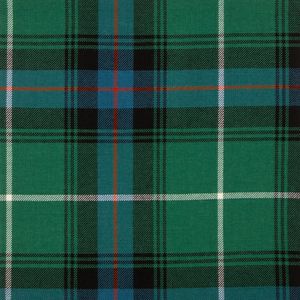
MacDonald of the Isles Hunting Ancient

MacDonald of the Isles Red Modern

MacDonald of the Isles Red Ancient

MacDonald of the Isles Htg Weathered

MacDonald of Sleat Modern

MacDonald of Sleat Ancient

MacDonald of Ardnamurchan Modern

MacDonald of Ardnamurchan Ancient

MacDonald of Keppoch Modern

MacDonald of Keppoch Ancient

MacDonald of Staffa Modern

MacDonald of Kingsburgh Ancient
